Chanel
The couturière who freed the modern woman and made costume jewelry an art.
Few names have shaped modern style as completely as Chanel, and few have done more to raise costume jewelry to an art worthy of the couture houses. The maison that Gabrielle Bonheur Chanel built changed how women dressed, how they adorned themselves, and what the word luxury was permitted to mean.

From a Convent to the Rue Cambon
Gabrielle Chanel was born in 1883 in Saumur, France, in circumstances far removed from the salons she would one day command. After her mother died, she spent part of her girlhood at the convent of Aubazine, where the nuns taught her to sew and where the severe beauty of black, white, and worn stone settled permanently into her eye. The name Coco came later, during a brief turn singing in provincial cabarets.
With the support of early patrons, among them the socialite Étienne Balsan and the great love of her life, the English businessman Arthur "Boy" Capel, she opened a millinery shop in Paris in 1910 and seaside boutiques in Deauville and Biarritz in the years that followed. The hats came first. The revolution came soon after.
The Woman Who Freed Fashion
Chanel took jersey, a humble knit then reserved for men's underclothes, and built from it a new and unencumbered elegance. She did away with the corset, borrowed freely from menswear, and proposed a silhouette founded on ease, movement, and quiet confidence. In 1926 American Vogue named her plain black dress "the Chanel Ford," predicting that, like the automobile, it would become a uniform for women everywhere. It did. Five years earlier she had introduced Chanel No. 5, the first fragrance to carry a couturier's name and a commercial triumph that would sustain the house for generations.
Fashion fades, only style remains the same.Gabrielle Chanel

Why Her Jewelry Matters
Chanel's contribution to jewelry was every bit as radical as her contribution to dress. In an age when jewels existed to broadcast a husband's fortune, she insisted that adornment was a question of style rather than net worth. She layered ropes of faux pearls over tweed and jersey, set frank imitations beside the occasional real stone, and declared that jewelry should decorate a woman rather than price her. This was the birth of costume jewelry as a couture art form, and the foundation of the haute couture costume jewelry that collectors prize today.
To realize her vision she called on the finest hands in Paris. Maison Gripoix translated her ideas into pâte de verre, the luminous poured glass, deep in emerald, sapphire, and ruby, that gives vintage Chanel pieces their stained glass glow. The Sicilian aristocrat Fulco di Verdura designed her celebrated enameled cuffs, banded with bold Maltese crosses. And in 1932, at the depth of the Depression, Chanel astonished Paris with Bijoux de Diamants, a collection of fine jewelry in platinum and diamonds composed around stars, comets, and ribbons, motifs that remain house signatures to this day.
The vocabulary she established, comets and camellias, gilt and glass, baroque pearls and Byzantine color, is the vocabulary collectors still pursue. It is why a piece of Chanel costume jewelry can hold its own beside fine jewelry, and why the finest examples now command serious sums at auction.

The House Today
Chanel closed her couture house at the outbreak of war in 1939, and the years that followed were complicated ones; her wartime conduct remains a subject of debate among historians. In 1954, at the age of seventy, she staged one of the great comebacks in fashion, reintroducing the collarless braid-trimmed tweed suit and the codes that still define the brand. She worked until her death in Paris in 1971.
The house she left behind only grew. Karl Lagerfeld led Chanel from 1983 until his death in 2019, reinventing the maison for a new century while polishing its founding codes: the interlocking double C, the camellia, the pearl, the chain. Virginie Viard, his longtime collaborator, succeeded him before Matthieu Blazy took up the role of artistic director in 2025, becoming only the fourth designer to lead the house in more than a century. Chanel today stands among the most influential names in haute couture and among the most collected in vintage costume jewelry.
Chanel at MDVII
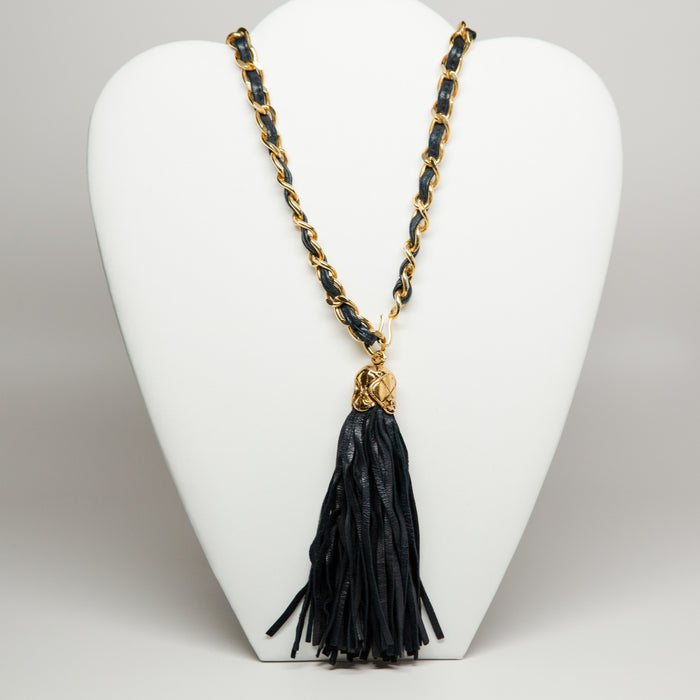
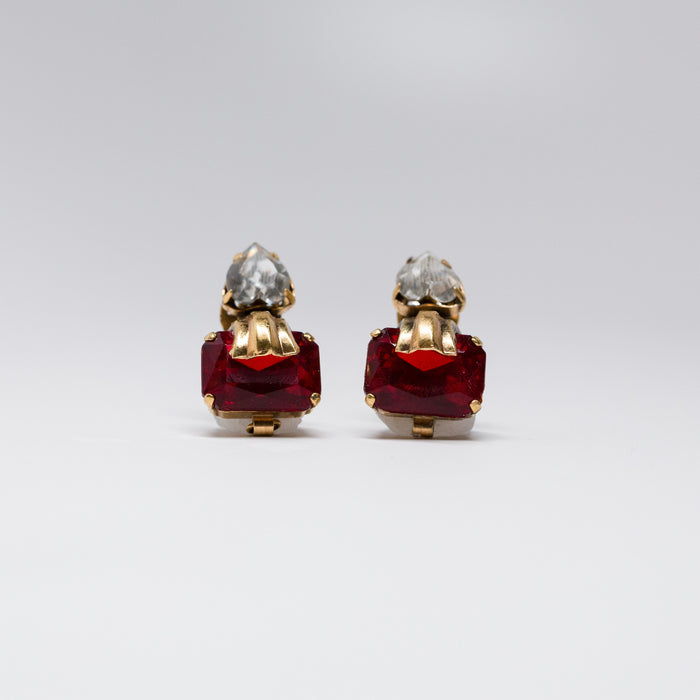
At MDVII, Chanel holds a place of particular reverence. We have sourced and placed exceptional examples of her costume jewelry, including pieces brought to auction through Christie's. The necklace and earrings shown on this page found new homes there in December 2025, a measure of how keenly these works are sought. The Chanel pieces available now are gathered below.